
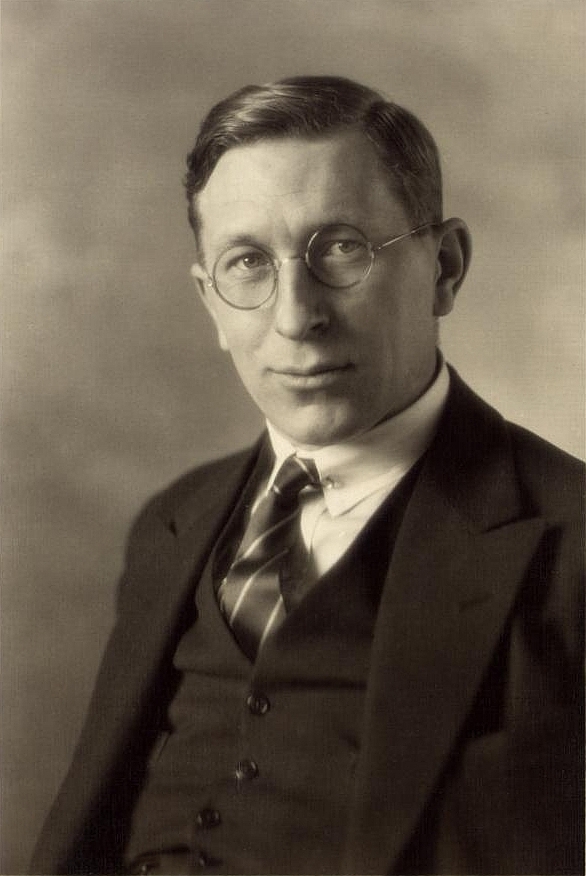
A Famous Canadian Citizen: Sir Frederick Banting
By Joy Dirks · October 2022
Some Canadians change the world from a small laboratory, working late into the night. Frederick Banting was a young doctor who would not let go of one big idea, and that idea has saved the lives of millions of people with diabetes in every country on earth. Understanding his life will help you with the Canadian citizenship test, and it may also inspire you.
Frederick Grant Banting was born in 1891 near Alliston, Ontario, the youngest of five children in a farming family. He studied medicine at the University of Toronto. When the First World War began, he served as a medical officer with the Canadian Army. At the Battle of Cambrai in 1918 he was wounded in the arm by shrapnel, yet he kept tending to wounded soldiers for hours under fire. For his courage he received the Military Cross.
After the war, Banting opened a small medical practice in London, Ontario, and taught at the university there. Patients were few, so he had time to read and think. One night in October 1920, after reading an article about the pancreas, an idea came to him in the early hours of the morning. He got up and wrote down a few words about a possible way to find the substance the pancreas makes, the substance that people with diabetes seem to lack.
In the spring of 1921, Banting travelled to Toronto and presented his idea to Professor John Macleod at the University of Toronto. Macleod was doubtful, but he gave Banting a small laboratory, some research animals, and a young student named Charles Best to help him. Through the long, hot summer of 1921, Banting and Best worked day after day, and at last they prepared an extract that kept diabetic dogs alive and well. They called the extract insulin.
In January 1922, a fourteen year old boy named Leonard Thompson lay close to death from diabetes at Toronto General Hospital. Doctors gave him the extract, and he recovered. Within a short time, insulin was being produced in larger amounts, and a disease that had always ended in death became a condition that people could live with for a full lifetime.
In 1923, Banting and Macleod received the Nobel Prize in Physiology or Medicine. Banting was only 32 years old, and he remains the youngest person ever to receive the Nobel Prize in Medicine. True to his character, he shared his prize money with Charles Best. Macleod shared his portion with James Collip, the biochemist who had found a way to purify the extract for use in people.
Banting stayed in Toronto and led a research institute at the university, which was named in his honour. Kings and governments honoured him, and he was made a knight, yet people who met him remembered a modest man who believed the discovery belonged to his whole team and to Canada.
When the Second World War began, Banting served Canada once more, working to connect medical science with the needs of the armed forces. In February 1941, the aircraft carrying him to England crashed in Newfoundland. He survived the crash but died of his injuries the following day, at the age of 49.
His childhood home in London, Ontario is now Banting House, a museum where a flame called the Flame of Hope burns day and night. It will be put out only when a cure for diabetes is found. Stories like his are part of the Discover Canada study guide because they show what new citizens join when they take the oath: a country where one determined person, working with others, can change life for everyone, everywhere.
Joy Dirks
October 2022